What Is Regenerated Yarn?
Regenerated yarn is yarn produced by mechanically or chemically reprocessing existing textile waste or used fabrics back into fibre. The word "regenerated" can be translated as "reborn" — which captures the essence of the concept.
Two main methods are used to produce regenerated yarn:
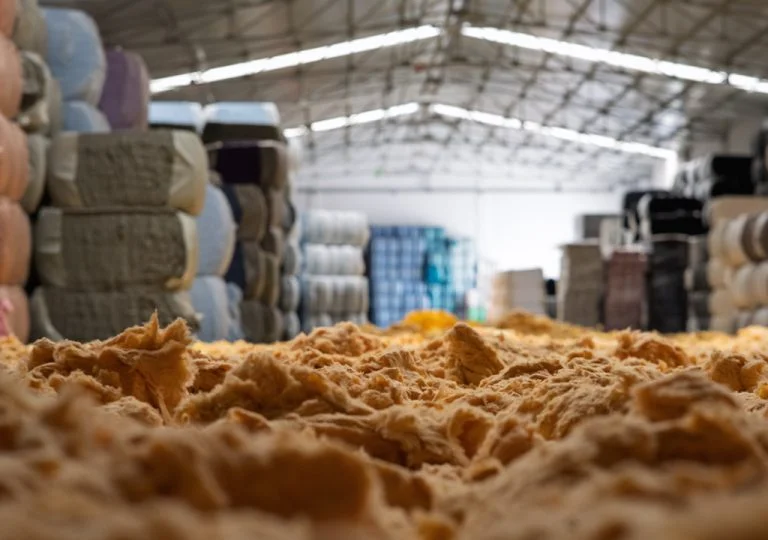
Mechanical (Physical) Regeneration: Used fabrics or cutting waste are shredded and reduced to fibre. Because fibre length may shorten in this method, it is typically used for blended-yarn production. The GRS-documented regenerated cotton yarn produced at Sesli Tekstil is also obtained this way.
Chemical Regeneration: Synthetic fibres such as polyester are broken down in solvent baths back to raw monomer, then repolymerised. Yarn obtained this way can reach almost the same quality as virgin yarn.
What Is Recycled Yarn? How Does It Differ from Regenerated Yarn?
In the Turkish market, "recycled yarn" and "regenerated yarn" are often used interchangeably; however, technically there is a fine distinction.
Recycled yarn: Refers to yarn obtained from post-consumer waste (PET bottles, used garments, industrial residue). In international standards it is classified as "post-consumer" or "post-industrial recycled".
Regenerated yarn: A broader concept; covers yarn produced from both pre-consumer waste (factory scraps, cutting waste) and post-consumer waste.
Use of Regenerated Cotton Yarn at Sesli Tekstil
Sesli Tekstil produces regenerated cotton yarn at its production facility in the Uşak Organized Industrial Zone and applies it across different product lines:
- GRS-documented regenerated cotton yarn: Sustainable yarn obtained through mechanical recycling from textile waste and cotton production cutting scraps. Produced with significantly lower water consumption, lower energy use and a lower carbon footprint than virgin cotton.
- Blended-yarn component: Regenerated cotton yarn can be combined with virgin cotton in cotton-acrylic blend recipes; this approach offers buyers with sustainability targets an alternative that does not compromise on tactile comfort.
- GRS shipment on request: For export buyers seeking environmental documentation, regenerated cotton yarn in our yarn category can be shipped together with a GRS Transaction Certificate.
Advantages of Regenerated Yarn: Why Choose It?
1. Environmental Benefit
Sesli Tekstil's use of regenerated cotton yarn directly reduces raw-material consumption in the production process. Compared with virgin cotton fibre, regenerated cotton uses only a fraction of the water required, significantly less energy and delivers a meaningfully lower carbon footprint.
2. International Buyer Demands
Major European retail chains and textile importers are increasingly demanding sustainability documentation from their suppliers from 2025 onwards. Sesli Tekstil's use of GRS-certified regenerated cotton yarn helps our buyers in Europe, Russia and Spain meet their compliance requirements.
3. Quality Consistency
Tests carried out in the Sesli Tekstil quality-control laboratory show that blanket and blended-yarn products made from regenerated cotton yarn perform close to virgin-cotton equivalents in wash fastness, tensile strength and durability.
GRS Certification: Transparency Assurance for Regenerated Yarn
Sesli Tekstil is a GRS (Global Recycled Standard) certified textile manufacturer. This certification ensures:
- Independent verification of regenerated content at every stage, from raw material to finished product,
- Compliance with chemical-use and social-responsibility standards,
- That customers can credibly claim "X% recycled content" on their products.
Under our GRS scope, Sesli Tekstil's regenerated cotton yarn has an end-to-end traceable supply chain.
5 Questions to Ask When Buying Regenerated Yarn Wholesale
For wholesale yarn buyers, we at Sesli Tekstil recommend asking the following questions:
- What is the regenerated content ratio? A documented percentage (30%, 50%, 100%) should be provided.
- Is there a certificate? Look for independent documents such as GRS, RCS (Recycled Claim Standard) or Oeko-Tex.
- What is the source material? Post-consumer or post-industrial? Both are valid, but different markets may prefer one or the other.
- What about fibre length and moisture absorption? Shorter fibres in mechanical regeneration can affect performance.
- Is the supply chain documented? Without chain-of-custody certification, the claim cannot be verified.
Use of Regenerated Cotton Yarn at Sesli Tekstil
At its Uşak-based production facility, Sesli Tekstil produces GRS-documented regenerated cotton yarn. This yarn is applied in the following areas:
- GRS-certified regenerated cotton yarn: A yarn line obtained through mechanical recycling, available with GRS-documented shipment on request
- Blended-yarn blankets: Blankets in which regenerated cotton yarn is blended with acrylic or cotton-blend yarn, balancing durability and tactile comfort
- Blended-yarn pique: Sustainable blends where regenerated cotton yarn is added to a predominantly cotton recipe