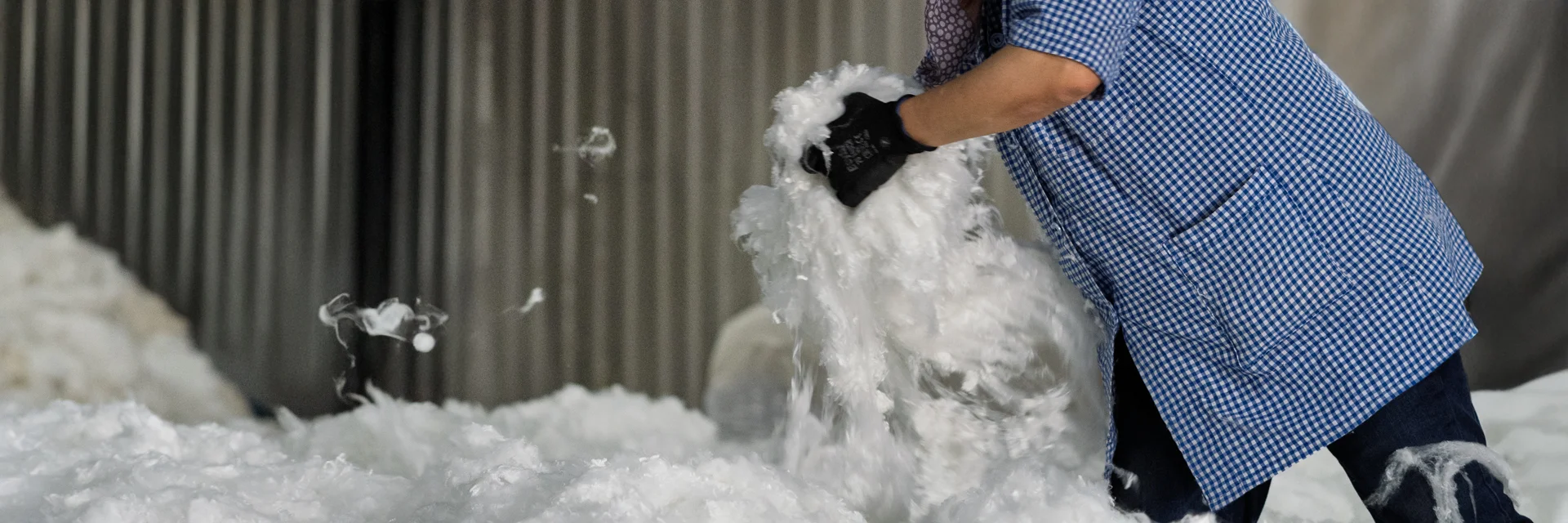
YARN
Yarn is not just the first step of production; it is also the fundamental building block that determines the quality, durability and tactile character of every product. At Sesli Tekstil, we work along two main lines in yarn production.
- Our regenerated cotton yarns for sale are sourced from sustainable raw materials and produced with advanced process-control systems.
- The cotton-acrylic yarns we use in our blanket and pique production are blended at proprietary ratios to deliver both softness and long-lasting performance.
All our yarns are inspected by human eye throughout the process — from fibre intake through twisting and winding. Quality control is not merely an outcome; it is a discipline maintained at every stage of production. Because we believe that every product is only as valuable as the care woven into its yarn.
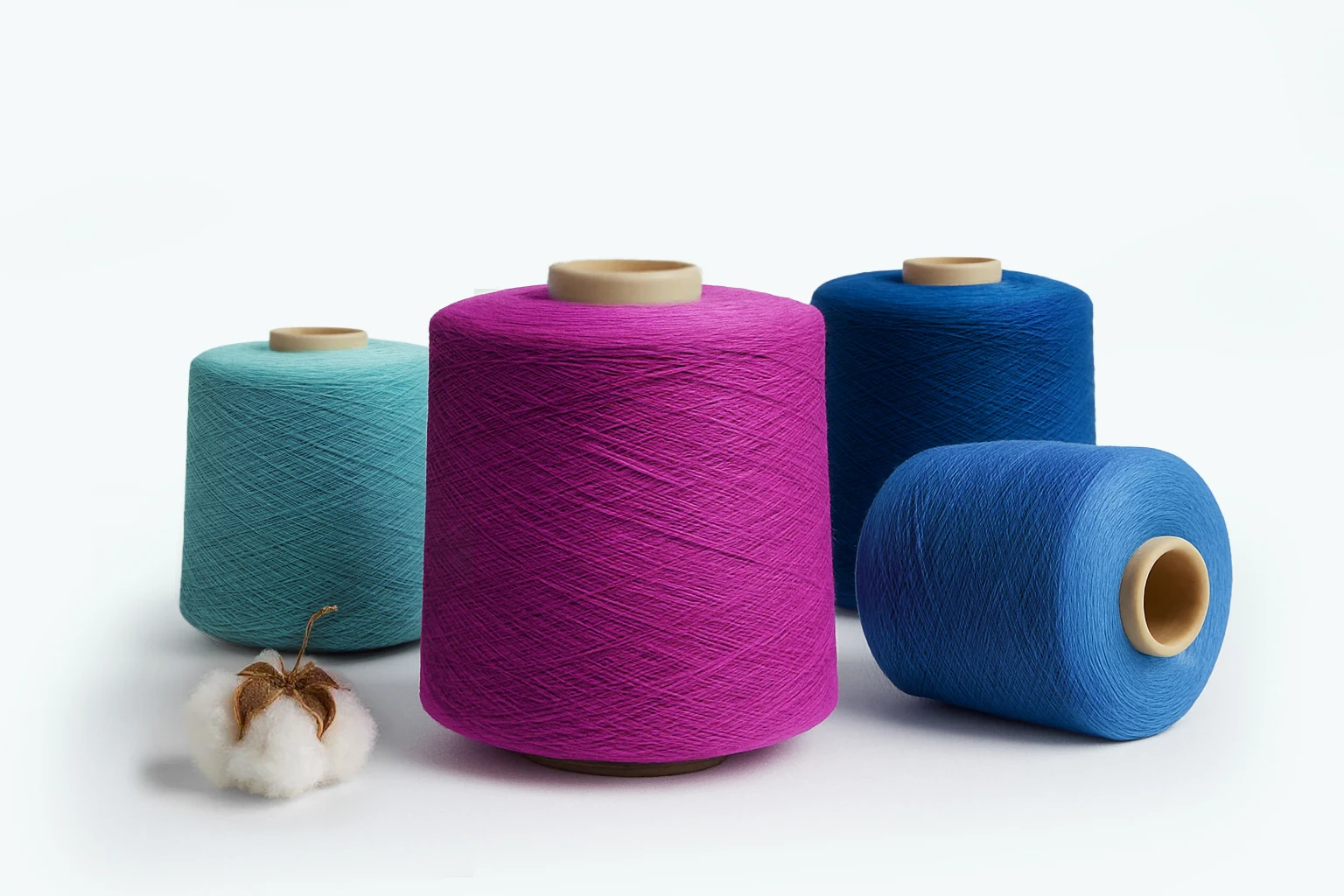
Yarn Product Groups
Regenerated Cotton Yarn
GRS certified; traceable recycled content.
Cotton-Acrylic Blended Yarn
A balanced blend for blanket and pique production.
Yarn Shade Card
Colour range, count information and shade card requests.
Our Yarn Range
Regenerated Cotton Yarn (GRS certified)
Regenerated cotton yarn is produced by returning cotton-based waste from textile production to fibre and spinning it again. Compared with virgin cotton it reduces the farming, irrigation and dyeing burden, making it one of the most concrete applications of the circular economy.
Our GRS (Global Recycled Standard) certificate applies to this production line. The standard requires recycled content to be traced by independent auditors from raw material through to finished yarn — meaning the recycled ratio is documented data, not a declaration. For buyers producing sustainability reporting, that chain of traceability is decisive.
Cotton-Acrylic Blended Yarn
The cotton-acrylic yarns we use in blanket and pique production are blended in specific ratios according to product type. The acrylic component adds loft, colour vividness and heat retention; the cotton component adds breathability, moisture management and a skin-friendly handle. The blend ratio is set before production according to the target weight and handle.
Knitting and Weaving Yarns
Count range and twist values are adjusted according to whether the yarn will be used in knitting or weaving applications. We offer a separate yarn shade card for each group.
Technical Specifications
| Property | Value |
|---|---|
| Count range | Ne 2/1 – Ne 30/1 |
| Raw material | Regenerated cotton · cotton-acrylic blend · acrylic |
| Certifications | GRS (regenerated cotton yarn line), Oeko-Tex Standard 100, ISO 9001, ISO 14001, ISO 45001, Amfori BSCI, TSE |
| Colour | Shade card colours; custom colour work on request |
| Applications | Blanket, pique, kilim, knitting and weaving |
| Quality control | Evenness, strength, shrinkage, colour fastness, pilling, abrasion |
| Origin | Uşak Organised Industrial Zone, Türkiye |
Values such as blend ratio, twist and weight are determined per order. You can request a sample for a specification suited to your project.
Which Yarn for Which Product?
| Product | Yarn structure | Key property |
|---|---|---|
| Blanket | Acrylic · cotton-acrylic blend | Loft, heat retention, colour vividness |
| Pique | Cotton and cotton blend | Breathability, lightness |
| Kilim | Acrylic (including regenerated acrylic) | Colour fastness, abrasion resistance |
| Knitting / weaving | Blend by count | Handle and dimensional stability |
Quality Control: Yarn Character Is Verified in the Laboratory
At fibre intake, batches are classified, blended to the blend plan and brought to suitable moisture and conditioning values. Each batch is given a traceability code, making a return path from finished product to raw material possible.
In spinning, production runs to the target count range; blend ratio, twist and lubrication values are set by product type. Batch stability is monitored through evenness and strength measurements. In the laboratory, weight, dimensional stability (shrinkage), colour standardisation, wash and rub fastness, pilling and abrasion tests are applied, with cross-verification at accredited external laboratories where required.
Wholesale Yarn, Shade Cards and Samples
Wholesale yarn enquiries are assessed on product type, count range and colour selection. You can review our yarn shade card to see the colours and write to us directly for order quantity, lead time and packing. Export enquiries are handled through the same channel.
- Shade card request: for the colour range and count information
- Sample: for blend and handle verification
- Quotation: together with product type and quantity
Frequently Asked Questions
Yarn quotation and samples
Share your count range, blend and colour choice; let us define the right solution together.