REGENERATED COTTON YARN
Regenerated cotton yarn is produced by returning cotton-based material that would otherwise be waste to fibre and spinning it again. It is the main yarn line Sesli Tekstil offers for sale.
How Is It Produced?
- Cotton-based textile waste is sorted by colour and type
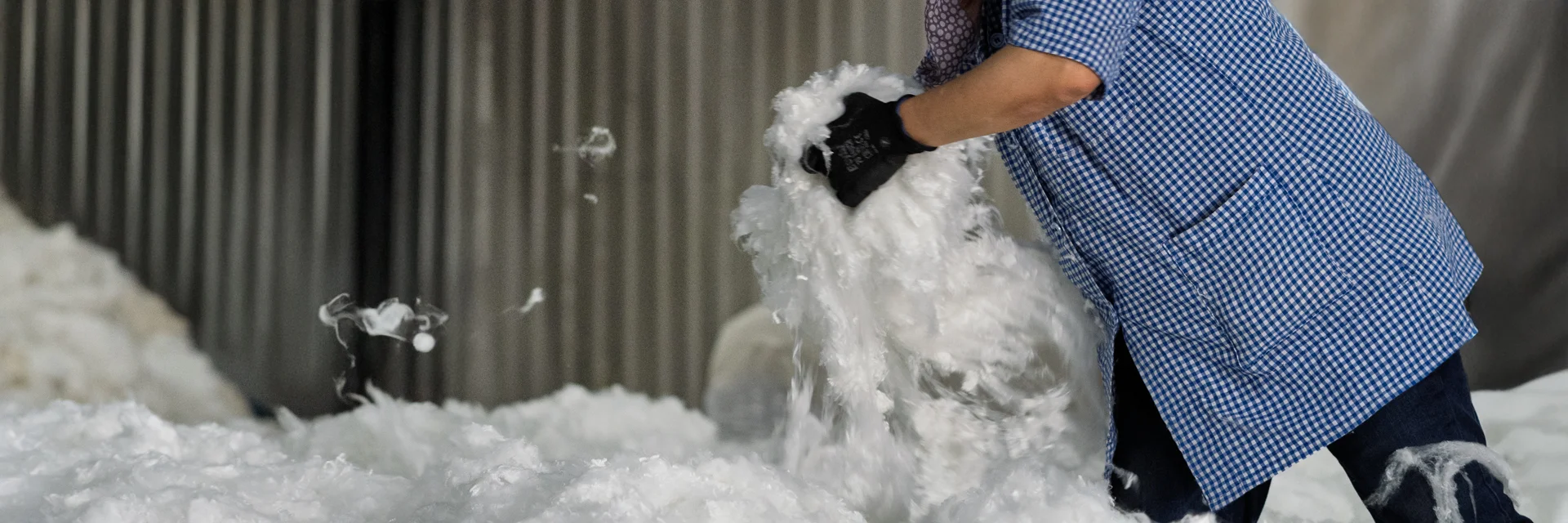
- It is mechanically opened and returned to fibre
- It is blended to the blend plan and conditioned; a traceability code is assigned to the batch
- It is spun to the target count range, with twist and evenness values monitored
- Batch stability is verified through strength and fastness testing
Environmental Contribution
Regenerated cotton takes its raw material from waste rather than agriculture, removing the water, land and input burden of cotton farming from the equation. In colour-sorted production the fibre is already coloured, so the need for re-dyeing is reduced or eliminated — dyeing being one of the most water- and energy-intensive stages in textiles.
For the full picture see regenerated and recycled yarn.
What Does the GRS Certificate Verify?
The Global Recycled Standard audits recycled content ratio, supply chain traceability, social and environmental criteria, and chemical restrictions together. Its most critical aspect is the chain of traceability: without a document flow at every stage, no recycled content can be declared in the final product. For buyers producing sustainability reporting, GRS therefore provides verifiable data rather than a claim.
Technical Information
| Property | Value |
|---|---|
| Count range | Ne 2/1 – Ne 30/1 |
| Certification | GRS · Oeko-Tex Standard 100 · ISO 9001 |
| Colour | Shade card colours; custom colour on request |
| Quality control | Evenness, strength, fastness, shrinkage |
| Origin | Uşak OIZ, Türkiye |
For the colour range see our yarn shade card page, where you can also request a physical shade card.
Wholesale and Export
Wholesale yarn enquiries are assessed with count range, colour and quantity details. Where sustainability documentation is required, the GRS scope certificate can be shared. Related page: cotton-acrylic blended yarn · all yarns.
Frequently Asked Questions
Regenerated cotton yarn quote
Share your count range, colour and quantity; we will send a shade card and samples.