What Is Weave Density in a Kilim and Why Does It Matter?
Weave density describes the number of weft and warp threads per unit length (typically 10 cm or 1 inch). In Sesli Tekstil kilim production, weave density is measured in two dimensions:
- Weft density (weft count per cm): Higher weft density makes the kilim surface fuller and firmer; pattern clarity also improves.
- Warp density: The density of the warp, which forms the load-bearing skeleton of the kilim, determines lengthwise strength.
In Sesli Tekstil kilims, the standard weft density range runs from 8 to 16 wefts per cm. Higher-density kilims are heavier, more durable and visually sharper in pattern.
How Does Yarn Quality Affect Kilim Durability?
The type of yarn used in Sesli Tekstil kilims directly determines product life and hand:
Acrylic Yarn
Acrylic yarn is used across most of the Sesli Tekstil kilim collection:
- Colour fastness is high; resistant to fading from sunlight.
- Easy to care for; machine-washable.
- Lighter and softer than cotton yarn.
- Regenerated acrylic yarn is widely used in Sesli Tekstil kilim production; obtained from production scraps and industrial textile waste, this yarn contributes to waste reduction.
Polyester Yarn
- Offers higher abrasion resistance; preferred in high-traffic areas (corridors, living-room entrances).
- Low moisture absorption; resists damage in wet environments.
Cotton Yarn
- Offers a natural hand and breathability.
- Excellent dye uptake; vivid or matte tones can be produced.
- Sesli Tekstil uses cotton yarn in kilim backs and double-layer constructions.
Other Factors Affecting Kilim Durability
1. Pile Height
In Sesli Tekstil kilim production, pile height is generally kept between 0 mm and 5 mm. Flat-woven (zero-pile) kilims are easier to transport and clean; low-pile kilims offer a softer surface while retaining their durability.
2. Colour Fastness
In the Sesli Tekstil quality-control laboratory, every kilim batch is tested for rubbing fastness (ISO 105-X12), light fastness (ISO 105-B02) and wash fastness (ISO 105-C06). Batches that fail these tests are pulled from the production line.
3. Backing Construction
Sesli Tekstil kilim backings can be reinforced with latex or anti-slip coating. This is especially helpful on hard floors, eliminating slip risk and extending product life.
The Sesli Tekstil Kilim Collection: What Can Wholesale Buyers Find?
The Sesli Tekstil kilim range spans a wide spectrum of market segments:
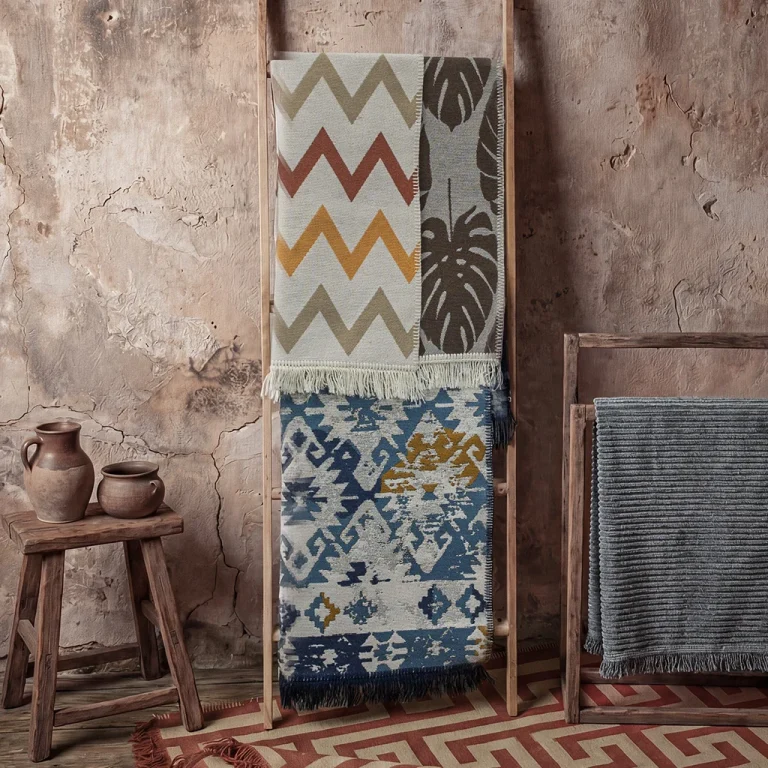
- Geometric-pattern kilim: Suited to modern and Scandinavian interiors; a high-demand collection in European export markets.
- Traditional-motif kilim: Preserving the classic Turkish kilim aesthetic, designed for Middle East and Russia markets.
- Solid-colour kilim: Minimum pattern, maximum versatility; ideal for hotel and corporate procurement.
- Regenerated acrylic kilim: Made from regenerated acrylic yarn recovered from industrial textile waste, for buyers seeking a more sustainable raw material.
The entire Sesli Tekstil kilim collection is produced under Oeko-Tex Standard 100 and ISO 9001 certification. GRS certification applies to Sesli Tekstil's regenerated cotton yarn production line; the kilim collection is not offered with a GRS certificate.
Wholesale Kilim Procurement Checklist
For wholesale kilim buyers, we at Sesli Tekstil recommend checking the following criteria:
- Is weave density documented? (wefts/cm value)
- Is yarn type and regenerated content ratio disclosed?
- Are colour-fastness test reports available?
- Are independent certifications such as Oeko-Tex available? (Note: GRS certification applies to Sesli Tekstil's regenerated cotton yarn line, not the kilim collection.)
- Is the backing construction (latex, anti-slip) specified in the product description?